
· Solveion · Perspectives · 5 min read
Twenty apps, three survivors
One of us has built close to twenty applications in the past year. Three are still in use. That ratio looks like waste, and the interesting question is whether it is. A case that the current building spree is a honeymoon phase, and what it is buying.
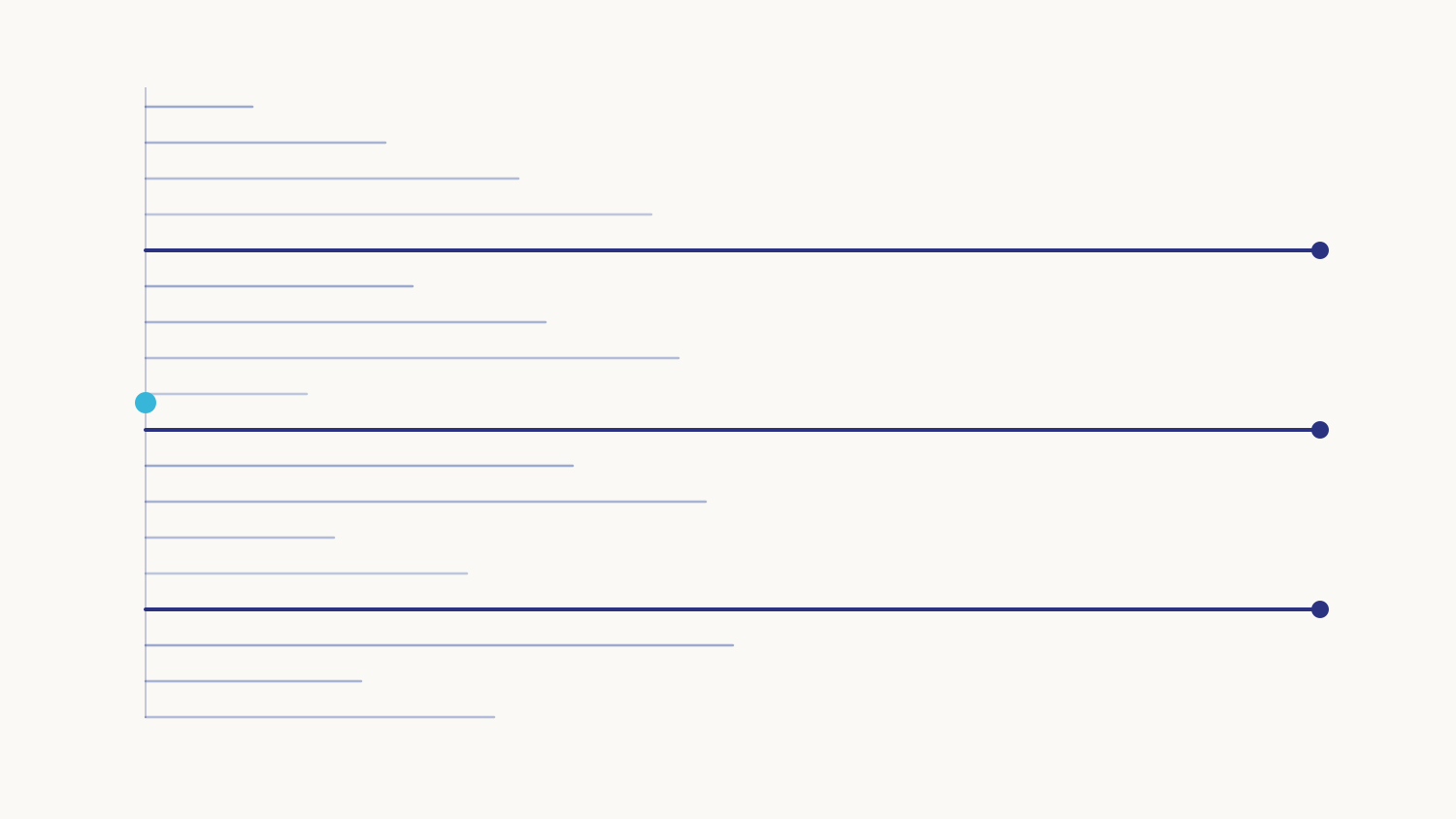
One of us has built somewhere between fifteen and twenty applications over the past year. Real ones, not toys: authentication, databases, deployment, the whole unglamorous middle. Three are in regular use. The rest are parked in repositories nobody opens, having consumed hundreds of hours and millions of tokens on the way to being abandoned.
That is roughly a fifteen per cent survival rate, and the honest first reaction is that it looks like an enormous amount of waste. We think the truth is more specific than that, and the specificity matters, because a great many people and a growing number of companies are about to run the same experiment.
The building spree is real
There are around 16.2 million citizen developers worldwide this year, a figure up almost forty per cent on last year, and Gartner expects it to pass 25 million by 2028, outnumbering professional developers roughly four to one inside large enterprises. Most of that activity is workflow automation, built by people whose job title has nothing to do with software.
This is not new in kind. Low-code and no-code have been promising it for a decade. What changed is that the tools stopped requiring you to learn the tool. Describing what you want in a sentence and getting a working prototype removes the last barrier that kept casual building rare, and predictably, casual building stopped being rare.
Why a fifteen per cent hit rate might be correct
Here is the part that gets missed when people reach for the word waste.
A hit rate is only meaningful against the cost of a miss. When building a working prototype cost a scarce developer two weeks, a fifteen per cent survival rate was indefensible; you could not run enough attempts for the winners to pay for the losers. When it costs one person an evening, the arithmetic inverts. Building twenty things to find three that matter is a perfectly rational search strategy if the search is cheap and the three are genuinely valuable.
So the failed builds are not automatically the problem. What matters is whether the search is converging. Twenty attempts producing three survivors is a portfolio. The same twenty attempts every year, forever, with the same hit rate, is a hobby that has learned nothing.
What the abandoned seventeen actually bought
They bought judgment, and they were the only way to buy it.
Every abandoned project taught something that cannot be learned from reading: which ideas feel compelling at eleven at night and hollow by the weekend, how much of the work sits after the demo rather than before it, which problems were never actually painful enough to sustain a tool. The reason our own building has become more selective is not discipline. It is that seventeen failures produced a fairly reliable instinct for which of the next twenty ideas is worth starting.
That is tuition rather than waste. But tuition is only worth paying once. The failure mode is not building things that die; it is never converting the deaths into selectivity, running the same undirected spree in year three that you ran in year one, and calling the token spend exploration.
Why we think this settles down
Our expectation is that the current spree is a honeymoon phase, and that it moderates as the novelty wears off. The pattern has run before. Personal websites in the nineties, blogs in the two-thousands, mobile apps after the app stores opened: each began with a period where people built because building had suddenly become possible, and each settled into a smaller population building because they had a specific need. The capability stops being the reason. The need becomes the reason.
We would expect the same here, and we would expect it to be visible first in individuals, who feel the cost of an abandoned project directly, and only later in organizations, where the cost is diffuse and someone else pays it.
The number a company should actually watch
If you are running this at organizational scale, the metric almost everyone reaches for is applications built. It is the wrong one. It counts starts, and starts are now nearly free.
The number worth watching is how many of those applications are still in use ninety days later, and who maintains the ones that survive. This is where citizen development has historically come apart: nearly a third of enterprises using these platforms report they have not built any of their highest-value applications with them, and internal tools routinely become orphaned the moment the person who built them changes role. A hundred applications built and four still running is not a productivity story. It is a support liability with good early press.
The same discipline works at both scales, and it is unromantic. Let the cheap search run, because it is genuinely cheap now and it genuinely finds things. But measure the survivors, not the starts, and treat a hit rate that never improves as the actual signal of waste. The tokens are not the expensive part. The years spent not getting more selective are.