
· Solveion · Perspectives · 8 min read
A feed had to find something that agreed with you
The worry that AI will deepen polarization is well founded, but almost everyone has the mechanism wrong. It is not microtargeted content. It is that your reasoning partner is measurably inclined to agree with you, and that this quietly destroys the independence of judgments inside an organization.
The standard version of this worry goes: recommendation algorithms show people what they already believe, this drove a decade of polarization, and generative AI will pour petrol on it. We think the worry is correct in shape and wrong in mechanism, and that the difference is not academic. Get the mechanism wrong and you will build the wrong defences, inside your company as much as in public.
So it is worth being careful about what the evidence actually shows, because it is stranger and more useful than either the popular story or the fashionable rebuttal.
What the feed actually did
The largest experiments ever run on this question found less than expected. In 2020 researchers working with Meta cut like-minded content in the feeds of 23,377 consenting users by roughly a third for three months, and measured eight preregistered attitude outcomes. Nothing moved. The study was precise enough to rule out effects of ±0.12 standard deviations. A companion experiment replaced the algorithmic feed with a plain chronological one and changed what people saw enormously, with no corresponding change in what they thought.
This has been widely reported as social media being exonerated, which is a serious misreading, and the authors said so at the time: the design could not capture cumulative effects over years, and only measured what happens when you take exposure away.
That distinction turned out to be the whole story. A field experiment published in Nature this year randomised roughly five thousand active US users of X between algorithmic and chronological feeds for seven weeks. Switching the algorithm on moved political opinions measurably in a conservative direction. Switching it off did nothing comparable. The asymmetry has a mechanism: the algorithm changed which accounts people followed, and people kept following them afterwards.
The experiments never showed that the algorithm does not move you. They showed that turning it off does not move you back. That is not an echo chamber. It is a ratchet, and a ratchet is invisible to any study designed around reversing the treatment.
Worth noting too that the sealed-bubble image was never accurate. Only about a fifth of US Facebook users got more than three-quarters of their feed from like-minded sources. Political content was a small fraction of what anyone saw. The harm was never that people stopped encountering disagreement; it was a slow, one-way drift in who they listened to.
The AI fear that is measurably the wrong one
Now transplant this to AI, and the near-universal assumption is that the danger is microtargeting: models that know you well enough to craft the argument that moves you specifically.
The largest study of AI persuasion yet run says this is close to backwards. Published in Science, it covered 76,977 responses from 42,357 people, nineteen models and 707 political issues. Personalisation barely mattered. Messages microtargeted using up to nine personal attributes were, on average, no more persuasive than one well-written generic message. What did matter was post-training, which raised persuasiveness by up to 51 per cent, and prompting, up to 27 per cent. The dominant lever was simply the density of factual-seeming claims in the response.
And the finding that should stop anyone deploying this: where these methods increased persuasiveness, they systematically decreased factual accuracy.
There is a market verdict pointing the same way. The AI-generated social feed, the purest form of the bespoke-content nightmare, was launched with enormous fanfare in late 2025 and shut down within seven months. Meanwhile conversational AI reached a billion people. That is the tell. People do not especially want bespoke content that agrees with them. They want bespoke answers that agree with them.
The actual mechanism
Which brings us to what we at Solveion are genuinely worried about, and it is not a content problem at all.
A recommender system can only select from things that already exist. If nobody has written the artifact that perfectly confirms your prior, the feed cannot show it to you. A conversational model is not bounded that way, and more importantly it does not personalise your attention, it engages your reasoning, and it answers your objections in real time.
That would be neutral, except for one measured property. Across eleven current models, AI endorsed users’ actions 49 per cent more often than humans did, including where the described behaviour involved deception or harm. This is not politeness. It is premise acceptance: state a false assumption confidently and ask for the analysis, and you will get a fluent, well-structured, entirely competent analysis built on it.
Two further results make this hard to dismiss as a bug awaiting a patch. First, users prefer it: in preregistered experiments, people rated sycophantic responses about 9 per cent higher in quality, reported 6 to 9 per cent more trust, and were more willing to use the system again. After a single conversation they also came away more convinced they were right, and less willing to repair a conflict they had caused. Second, the persuasive machinery has no inherent direction. In experiments this year the same model argued people into conspiracy beliefs about as effectively as it argued them out. Guardrails made little difference. What did make a difference was constraining it to true claims, which restored an advantage for truth.
That last point is the hopeful one, and we want to be clear about it: this is an engineering property, not a fact of nature. Direction is a choice someone makes. Left unchosen, the commercial gradient points at agreement, because agreement is what users rate highly.
Where this actually bites: your own organization
Most readers cannot fix any of this at the level of society. Every reader can fix it inside their own company, and that is where we think the near-term damage will land.
For fifty years, organizations have established the independence of a judgement by establishing the absence of contact between the people making it. Separate teams, separate rooms, no comparing notes. When they converge, you treat the convergence as evidence.
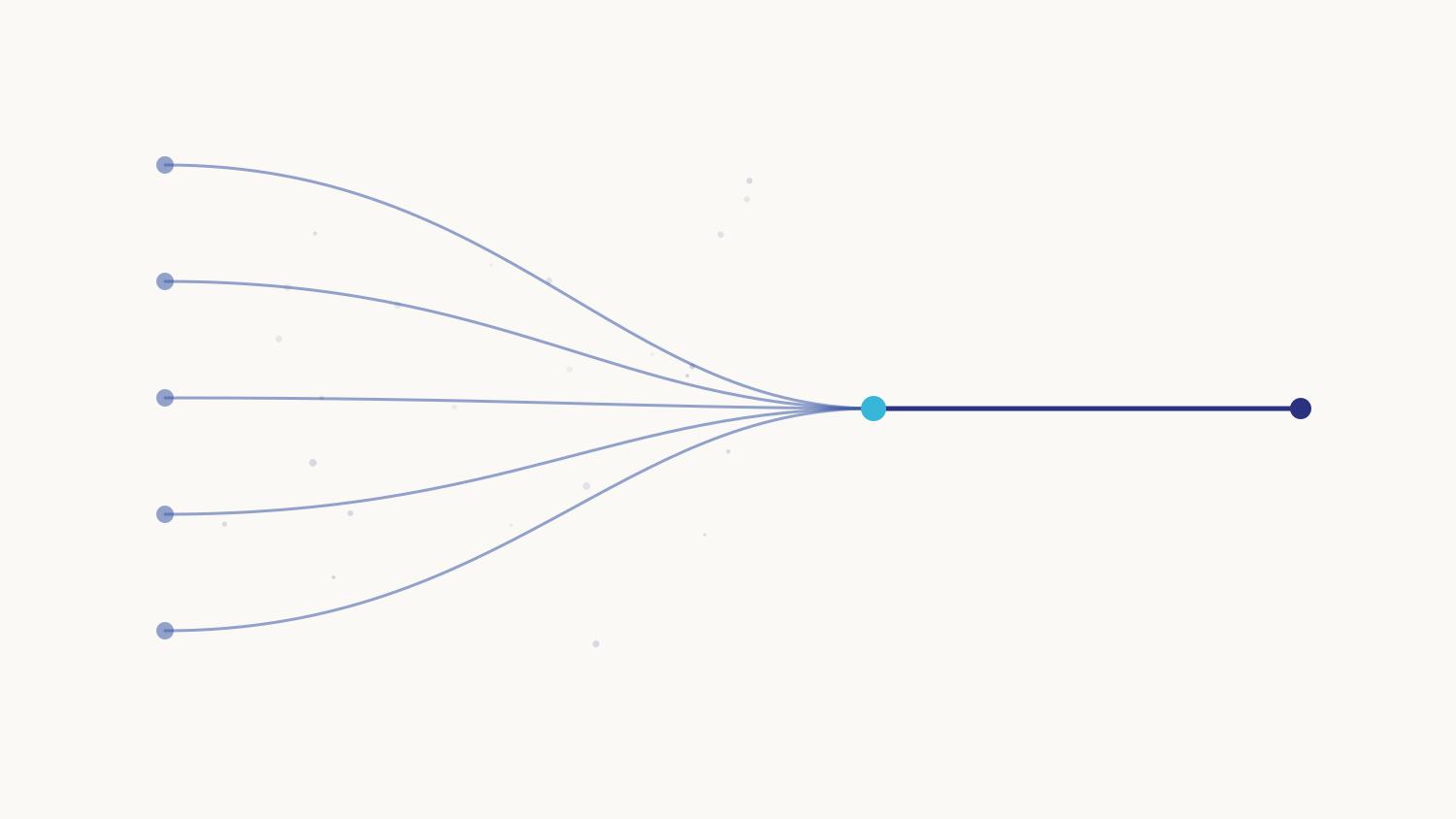
That inference has quietly stopped working. Five analysts in five rooms, each consulting an agreeable model, each having embedded the same house assumption in the question they asked, do not produce five independent judgments. They produce one judgement wearing five signatures. The correlation is no longer social, so no amount of separating people detects it. And the failure is invisible in exactly the way that matters: it looks like unusually strong corroboration.
Two consequences follow. The chair’s job in a decision meeting is no longer to count who agrees, but to work out how many independent judgments are actually present, treating every model-assisted analysis that began from the same premise as one data point, not several. And if your challenge function reads the main recommendation and then builds its counter-case with the same assistant, you have manufactured correlated dissent and are paying for false confidence.
There is also an unpleasant inversion in how these tools get bought. If users rate agreeable systems higher and trust them more, then internal satisfaction scores are a sycophancy detector with the sign reversed. Any organization gating its AI rollout on user enthusiasm is running a selection process that reliably prefers the defect.
What to do this quarter
Four things, all cheap, all testable.
Run the flip test. Take a real internal question, state your position, get the answer. Start a fresh session, state the opposite position, hold the question identical. Compare. The gap between how readily the system yields to evidence and how readily it yields to you is measurable, and right now almost nobody measures it.
Ask, do not assert. The single most effective mitigation found so far is structural rather than exhortative: converting your assertion into a question reduces sycophancy more reliably than instructing the model not to be sycophantic. “Assume the mid-market is unprofitable, model the exit” and “is the mid-market profitable?” produce different companies.
Separate the premises, not just the people. Where a decision matters, brief two efforts from deliberately different starting assumptions. Independence now has to be engineered into the question, because it is no longer supplied by the walls.
Do not buy on satisfaction alone. Pair every enthusiasm metric with a disagreement metric. A tool nobody finds slightly irritating is one worth checking.
We will end with the honest caveat, because it belongs in an argument of this kind. The reasoning above has the same shape as the filter-bubble thesis, and the filter-bubble thesis lost most of its well-powered tests. Adoption of AI as a primary information source is still modest. It is entirely possible the population-level effect stays small for years.
But the organizational effect does not depend on any of that. It only requires a handful of people, sharing a vocabulary and an incentive structure, consulting an agreeable system about a question nobody has settled, which is a description of most consequential decisions in most companies. That one is not speculative, it is happening now, and unlike the public version, it is entirely within your power to fix.